DNS is the system that translates domain names like nazuaf.com into the information devices need to connect to internet services. If DNS responses are forged or altered in transit, users risk being directed to incorrect addresses. DNSSEC (Domain Name System Security Extensions) is designed to help resolvers verify the authenticity and integrity of DNS data through cryptographic signatures.
While important, DNSSEC is not a replacement for HTTPS and does not encrypt DNS queries. This technology focuses on proving that received DNS data matches what was signed by the authoritative zone and that its chain of trust is valid. Here’s how it works, its benefits, limitations, and what to consider before enabling it.
What Is DNSSEC?
DNSSEC is a set of security extensions for DNS. Standard DNS can provide answers to domain name queries, but without cryptographic validation, resolvers don’t always have a way to ensure those answers are genuinely authentic. DNSSEC adds digital signatures to DNS record sets so that validation-supporting resolvers can check whether data comes from the correct chain of trust and hasn’t been modified.
DNSSEC doesn’t change how domain names are converted to IP addresses. The DNS lookup process still occurs; the difference is that signed answers include the data needed for validation. If the signature or chain of trust fails, validating resolvers typically mark the answer as invalid and reject the result rather than silently using it.
How Does DNSSEC Work?
DNSSEC uses public-key cryptography. Zone operators sign record sets using a private key, while the public key published in DNS enables resolvers to verify the signature. Validation proceeds in a chain from the parent zone to the target domain until reaching a trust anchor, typically the DNS root zone.
- The zone is signed. The authoritative DNS provider creates digital signatures for DNS record sets.
- Public keys are published. DNSKEY records provide public key information used in validation.
- The chain of trust is linked. DS records in the parent zone reference the expected child key. For registered domains, DS data is typically managed through the registrar.
- Resolvers check responses. Validating resolvers verify signatures, expiration, and the relationship between keys and DS records.
- Responses are accepted or rejected. If checks succeed, the data can be used. If they fail, the resolver can return a validation failure status, and users may see a message that the site cannot be reached.
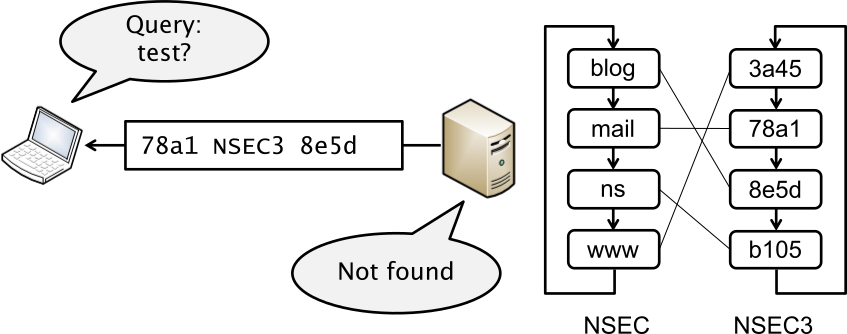
The illustration in this article shows the use of NSEC and NSEC3. These mechanisms can help prove that a particular name or record type is genuinely unavailable, so negative DNS answers can also be validated.
DNSSEC Record Types to Know
- DNSKEY: contains public keys for signature validation.
- RRSIG: holds digital signatures for DNS record sets.
- DS (Delegation Signer): links a child domain’s key to its parent zone.
- NSEC and NSEC3: provide authenticated proof that a name or record type does not exist.
These records work together, not as standalone settings. Therefore, enabling DNS signing on one side alone may not be sufficient. Incorrect or outdated DS records can break the chain of trust and cause domain validation to fail.
Benefits of DNSSEC for Domain Security
1. Helps prevent DNS response forgery
DNSSEC makes it harder for attackers to inject forged DNS responses that would be accepted as authentic by validating resolvers. This helps reduce the risk of attacks like cache poisoning, where false data enters a resolver’s cache.
2. Adds DNS data integrity
Digital signatures help resolvers detect changes to signed data. If records are altered without a valid signature, validation will fail. This provides an additional protection layer for the domain name translation process.
3. Supports a more trustworthy internet ecosystem
DNSSEC serves as a foundation for other security mechanisms that require authentic DNS data. However, success still depends on DNSSEC support in the domain zone, delegation chain, and resolvers used by end users.
DNSSEC Limitations That Must Not Be Ignored
- Not encryption. DNSSEC does not hide queried domain names or encrypt all DNS traffic. DNS over HTTPS (DoH) and DNS over TLS (DoT) handle protection of the communication path between client and resolver, serving different purposes.
- Does not replace HTTPS. DNSSEC does not encrypt connections to websites and does not prove that web page content is safe. Continue using HTTPS and good web security practices.
- Does not protect all attack vectors. DNSSEC does not automatically prevent registrar account theft, authoritative server compromise, malware, phishing, or malicious sites that have legitimate DNS records.
- Misconfiguration can disrupt access. Mismatched DS records, keys changed without proper updates, or expired signatures can make domains unreachable by validating resolvers.
- Support and management required. Domain operators need to ensure their DNS provider and registrar support proper configuration workflows and monitor signing status and key rotation.
How to Safely Enable DNSSEC
The exact steps differ by DNS provider and registrar, so follow the official instructions for your services. In general, take these steps:
- Check whether your authoritative DNS provider supports DNSSEC and can sign your domain zone.
- Enable DNSSEC in your DNS provider’s panel according to their instructions. Note the DS values or other information provided.
- Log into your domain registrar’s panel and add DS data matching the values from your DNS provider. Do not guess values or copy data from other domains.
- Allow time for propagation and cache updates, then check validation status with a trusted DNSSEC checker tool.
- If the domain becomes unreachable after changes, check DS and DNSKEY consistency and recovery guidance from your provider. Avoid deleting or changing records randomly.
Before enabling DNSSEC on production domains, ensure you have access to both registrar and DNS panels. If your service provides documentation on key rotation or recovery, understand those procedures first. For critical domains, make changes with a clear monitoring plan and recovery path.
How to Check Whether DNSSEC Is Working
Use a DNSSEC checker that displays validation status and the DS/DNSKEY chain. You can also use DNS diagnostic commands from your system or administrator tools that support DNSSEC checking. Check not only whether DNSKEY and RRSIG records are visible, but also whether the chain of trust is evaluated as valid by a validating resolver. Results from one resolver may differ if its configuration or cache differs, so verify with trusted tools.
Conclusion
DNSSEC adds cryptographic verification to help ensure DNS responses are authentic and unmodified. Its main benefits are strengthening DNS data integrity and reducing the risk of response forgery on validating resolvers. However, DNSSEC is not encryption, does not replace HTTPS, and does not protect domains from all forms of compromise. Enable it through your DNS provider and registrar with proper configuration, then verify the chain of trust so this additional protection doesn’t instead disrupt website availability. For official reading on DNSSEC, see ICANN’s explanation of DNSSEC.
Komentar (0)
Belum ada komentar. Jadilah yang pertama berkomentar.