
In software development and network infrastructure, design mistakes are often far more expensive to fix than coding errors. Many organizations do not discover security gaps until a system has been launched and exploited by malicious actors. This is where threat modeling plays an important role. It gives technical teams a proactive way to map potential cybersecurity risks long before the first line of code is written or a server is configured.
For technology professionals and anyone concerned about digital privacy, understanding this concept is not just a security engineer’s responsibility. It is a way of thinking that helps us assess how a system could be misused and what steps should be taken to prevent it.
What Is Threat Modeling?
Simply put, threat modeling is a structured process for identifying, communicating, and understanding threats, along with the mitigations needed to protect digital assets. These assets may include user data, login credentials, server infrastructure, or even a company’s reputation.
The process is usually carried out during the architecture design phase. Its goal is to answer several fundamental questions: What are we building? What could go wrong? How would we respond if it did? And are the mitigations we have designed effective enough?
By answering these questions, development teams can focus on more than functionality. They can establish a strong cybersecurity foundation from the beginning of the software development life cycle.
Practical Steps for Applying Threat Modeling
You do not need specialized software to get started. A basic approach can begin with a team discussion that follows these four core steps:
1. Define the System Architecture
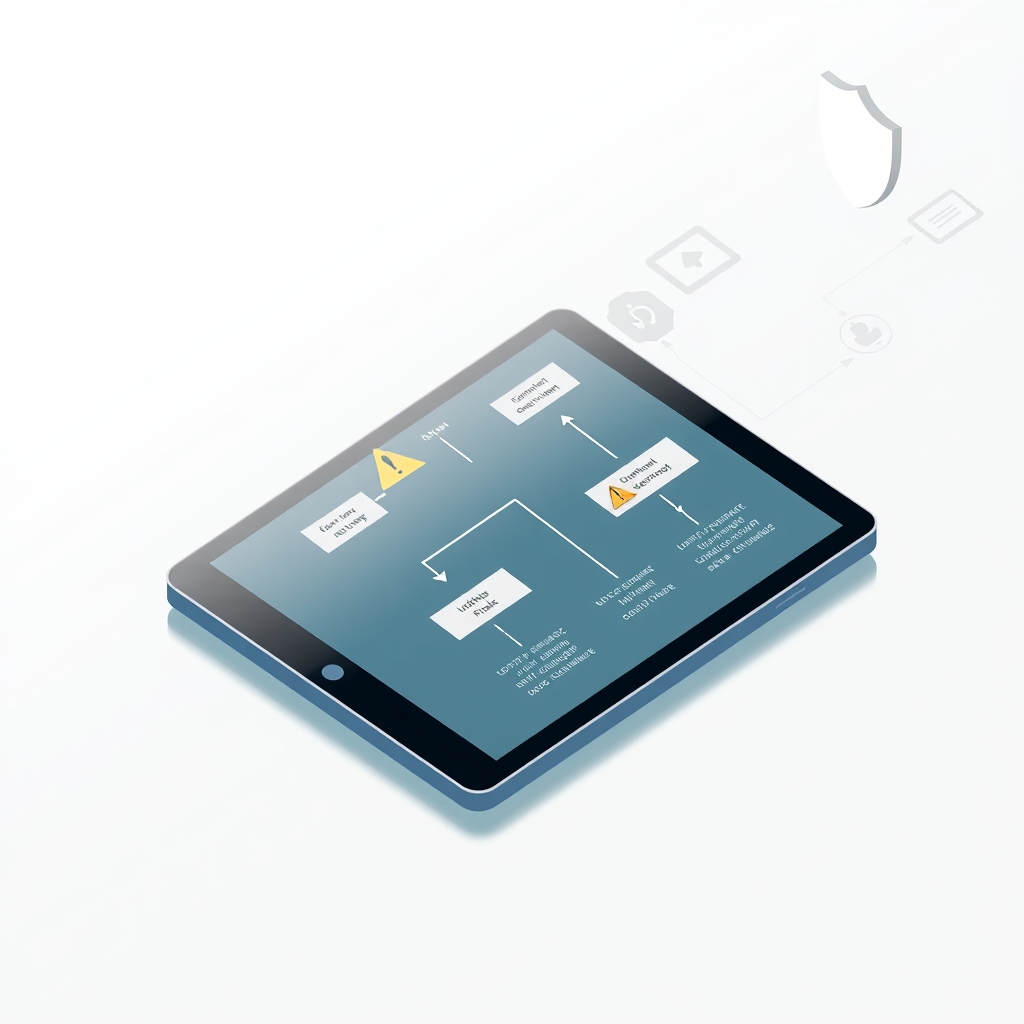
The first step is to create a Data Flow Diagram (DFD). Map how data moves from users to the interface, passes through APIs, enters databases, and interacts with third-party services. Every point where data crosses between components is a trust boundary that could become a target for an attack.
2. Identify Threats
Once the diagram is complete, review each component and ask how it could be misused. For example, if an application accepts file uploads, does it validate file types? If an API receives an authentication token, how is that token verified? The assessment should cover scenarios in which an attacker has either internal or external access.
3. Determine Mitigations
For every identified threat, design an appropriate security control. Mitigations may include changes to the architecture, additional encryption, the principle of least privilege, or strict input-validation mechanisms. Make sure the controls balance security with user experience, so that protecting digital privacy does not come at the expense of essential functionality.
4. Validate and Document
The final step is to verify that the planned mitigations actually address the identified weaknesses. Document the entire process clearly so that future maintenance teams understand the reasoning behind specific design decisions.
Understanding the STRIDE Method
One of the most widely used frameworks for identifying threats in threat modeling is STRIDE, developed by Microsoft. The acronym represents six major threat categories that should be reviewed for every system component:
- Spoofing: An attacker impersonates another entity, such as using stolen credentials to access a user’s account.
- Tampering: Data is modified without authorization while in transit or at rest, for example by changing a price parameter in an API request.
- Repudiation: A user can deny having performed an action because the system does not maintain adequate audit logs.
- Information Disclosure: Sensitive data is exposed to unauthorized parties, often directly affecting users’ digital privacy.
- Denial of Service (DoS): An attempt to make a service unavailable to legitimate users by overwhelming system resources.
- Elevation of Privilege: An attacker obtains higher access rights than they should have, such as moving from a regular user account to an administrator account.
Using STRIDE gives development teams a systematic checklist to help ensure that common attack vectors are not overlooked during a cybersecurity assessment.
Case Study: A Personal Notes App
To see how this works in practice, imagine that you are designing a web-based note-taking application that stores users’ private journals. Applying threat modeling would reveal several specific risks.
For Information Disclosure, the notes contain sensitive information. If the database is not encrypted at rest or is vulnerable to SQL injection, users’ private data could be exposed. One mitigation is to apply client-side encryption before data is sent to the server, so that even database administrators cannot read the contents of the notes.
For Spoofing, a weak session mechanism could allow an attacker to hijack another user’s account. Possible safeguards include requiring multi-factor authentication and ensuring that session cookies use security attributes such as HttpOnly and Secure.
This example shows how structured threat analysis can help anticipate problems that might otherwise go unnoticed if a team focuses only on building features.
Common Mistakes to Avoid
Many teams struggle with threat modeling because of several bad habits. First, they treat it as a one-time activity. Systems continue to evolve, new features are added, and the threat landscape changes. The process should be repeated whenever the architecture undergoes a significant change.

Second, teams may focus too heavily on complex, high-level threats while overlooking basic risks such as incorrect server configurations or outdated third-party libraries. Third, they may involve only the security team, leaving out developers and system architects who understand the application’s implementation details best.
Security is not an add-on feature attached at the end of a project; it is an intrinsic property of a design that has been carefully considered from day one.
Conclusion
Threat modeling is an investment of time that can deliver substantial long-term savings. By systematically mapping cybersecurity risks with frameworks such as STRIDE and documenting data flows, technology teams can build more resilient systems. For anyone managing a digital product, making this process a standard part of the development workflow is a crucial step toward maintaining user trust and protecting digital privacy against constantly evolving threats.
Komentar (0)
Belum ada komentar. Jadilah yang pertama berkomentar.